
Why You Learn More from a Bad Drawing Than a Good One

Updated: Sep 9

There’s a moment most beginners dread.
You’ve spent time on a drawing — really tried — and it doesn’t look right. The proportions are off, or the shape isn’t quite what you were seeing, or it just feels flat. And your first instinct is to close the sketchbook, or turn the page, or quietly decide you’re not cut out for this.
I’ve felt that. I see it in my classes every week.
But here’s what I’ve come to understand — both from years of teaching and from what researchers who study learning have to say about it:
The drawing that went wrong is almost always more valuable than the one that worked.
That’s not consolation. It’s actually how learning works.
What Your Brain Does When a Drawing Goes Wrong
When you get something right first time, your brain notes the outcome and moves on. There’s not much for it to do — it worked, no adjustment needed.
But when something goes wrong — when the line lands in the wrong place, or the shape looks nothing like what you’re seeing — something very different happens. Your brain has to stop, compare what it intended with what actually appeared on the page, identify the gap, and figure out what to do differently.
That process — detecting the mistake, comparing it and making an adjustment — is where new neural pathways are being built. It’s cognitively demanding in exactly the right way. The struggle isn’t a sign that you’re doing it wrong. It’s the mechanism of learning itself and it's how you began to learn as a child.
Psychologist Robert Bjork, whose work focuses on how people acquire and retain skills, calls this principle desirable difficulties — the idea that conditions which make learning feel harder in the moment often produce stronger, more durable understanding over time. Difficulty isn’t an obstacle to learning. It’s almost always the engine of it.
Why ‘Getting It Right’ Can Actually Slow You Down
This might feel counterintuitive, but bear with me.
When you copy a tutorial step by step — following each instruction carefully, producing something that looks polished at the end — it can feel like excellent progress. And in terms of the finished result, it often looks that way too.
But what you’ve learned is how to follow those particular steps for that particular subject in those particular conditions. Transfer that to a blank page with a different subject and no instructions? That’s much harder. Because the real skill — looking, translating what you see into marks, adjusting when something’s off — wasn’t what you were practising.
The messy, imperfect, independent attempt — the one that doesn’t look as good — actually builds more of that transferable skill. It’s forcing you to do the hard part yourself.
(This connects to something I wrote about in The One Thing Most Beginners Get Wrong About Learning to Draw — specifically why watching tutorials and actually building skill are two very different things.)
The Growth Mindset Connection
Carol Dweck’s research on mindset — the difference between believing your abilities are fixed versus believing they can develop through effort — maps beautifully onto what happens in a sketchbook.
A fixed mindset hears “this drawing looks wrong” and concludes “I’m not artistic.” A growth mindset hears the same thing and asks: “what did I miss? What could I look at more carefully next time?”
The difference isn’t talent. It’s the story you tell yourself about what the difficulty means.
And here’s the thing: you can practise the growth mindset response. You can deliberately reframe what a bad drawing means — not as evidence of failure, but as internal data. As information about where your eye needs more training, or where you’re still drawing from assumption rather than observation.
That reframe changes everything about how it feels to sit down with a sketchbook.

What to Do With a "Bad" Drawing
First: don’t throw it away.
I know that instinct. I’ve had it myself. The drawing looks wrong and the fastest solution feels like making it disappear. But that drawing is a record of where you were. In three months, it’ll be one of the most interesting things in your sketchbook — not because it’s good, but because you’ll be able to see exactly how far you’ve come.
Second: look at it with curiosity rather than judgment.
Instead of “why does this look wrong?” — which tends to spiral into self-criticism — try asking: “what specifically is different from what I was seeing?” Is the proportion off? Is it the angle? Did you draw what you thought the object should look like, rather than what it actually looked like from where you were sitting?
These are useful questions. They tell you exactly what to practise next.
Third: try it again.
Not because you need to fix it or make it better. But because the second attempt — informed by what you just noticed — will almost always feel different. Easier. More observed. That’s not luck. That’s your brain applying what it just learned from the struggle.
(If you’d like a simple structure for this kind of practise, I wrote about it in Why Drawing Slowly Is the Whole Point — specifically how slowing down and really looking changes what appears on the page.)
A Small Shift in How You See Your Sketchbook
What I’m really talking about here is a change in what a sketchbook is for.
If it’s a place where things have to look good, every imperfect drawing is a small failure. The sketchbook becomes something to avoid.
But if it’s a place where you’re training your eye, building your hand, and paying attention to what you see — then every drawing, good or bad, is doing something useful. The sketchbook becomes somewhere to return to. Somewhere safe to get things wrong.
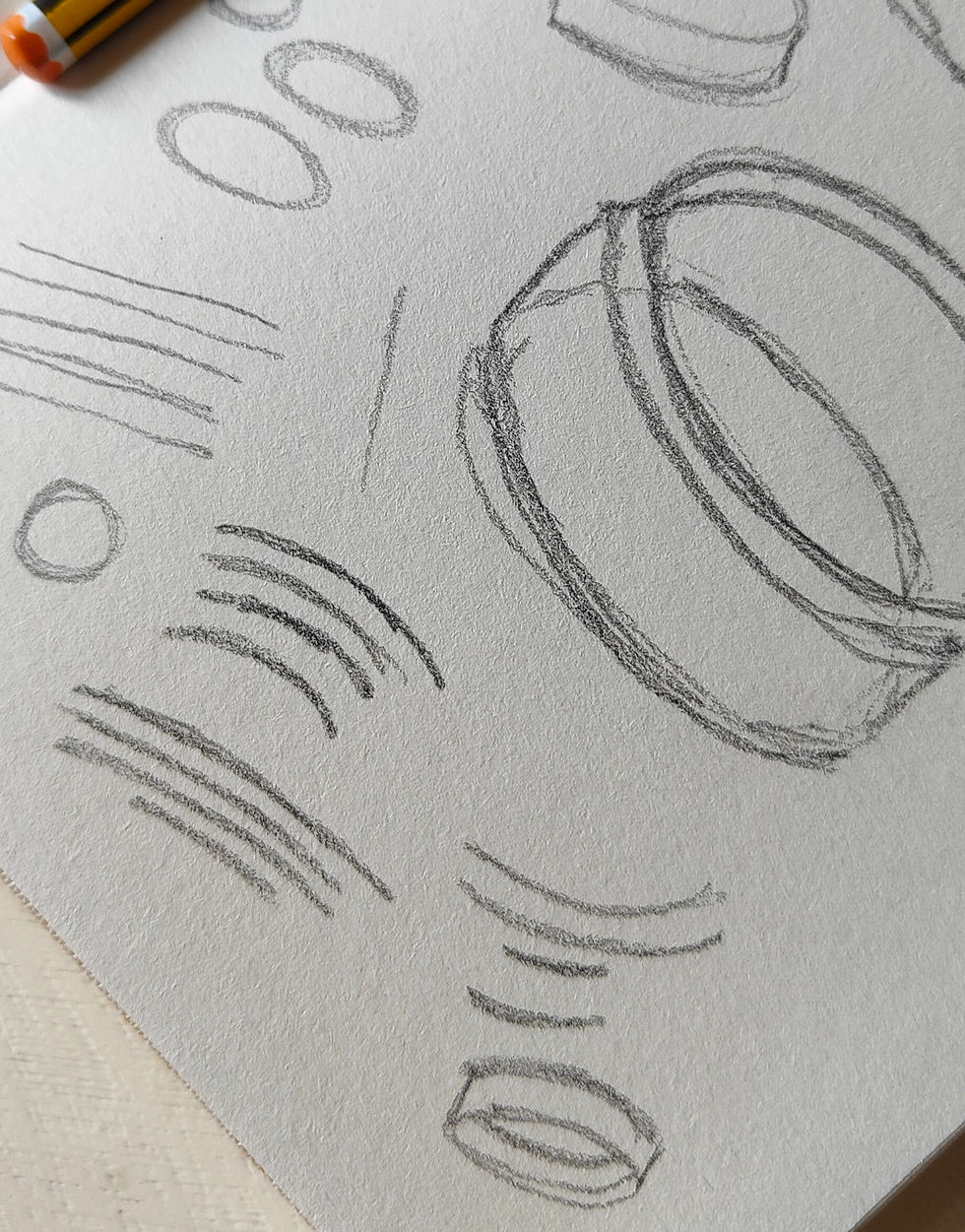
That shift — from performance to practice — is one of the most important things I’ve seen change how adult beginners feel about drawing. It doesn’t happen overnight. But it does happen.
And it starts with leaving the ‘bad’ drawing on the page instead of tearing it out. Read more about this here
If you’ve been drawing recently and found yourself wanting to give up when things didn’t go to plan — I hope this helps. And if you’d like a gentle, structured framework to practise exactly this kind of patient, curious approach to drawing, my free 5-day course KickstART Your Art is a good place to begin. You can grab your free place here
What’s the drawing you’re most tempted to hide? Tell me in the comments — you might be surprised how many people feel the same way. 😊
Debbie x


Comments